

Dog wheezing is a high-pitched whistling sound caused by narrowed or blocked airways, and it often points to allergies, airway inflammation, infection, a collapsing trachea, or something stuck in the throat. If your dog starts wheezing, call your veterinarian, and seek emergency care right away if your dog struggles to breathe or the gums look pale or blue.
Hearing an unusual noise every time your dog breathes is unsettling, especially when you can’t tell whether it’s a passing tickle or a serious problem. Some causes are mild and manageable, while others can close off the airway and become life-threatening quickly. At All Kinds Veterinary Hospital in Callaway, MD, our team helps pet parents sort out what’s behind their dog’s breathing changes and what to do next. In this guide, you’ll learn how to recognize dog wheezing, which symptoms signal an emergency, the most common causes, how veterinarians reach a diagnosis, what treatment and recovery look like, and practical ways to protect your dog’s airways.
What Is Dog Wheezing, and Which Symptoms Are Concerning?
Wheezing happens when air squeezes through an airway that has become narrower than normal, creating a whistle or squeak as your dog breathes.
How Wheezing Differs From Other Breathing Sounds
Dog wheezing is often confused with other noises. Snoring and snorting usually come from the nose and soft palate, especially in flat-faced breeds. Reverse sneezing produces loud, rapid inhalations in short bursts and typically stops on its own within a minute. A honking cough, often compared to a goose call, is a hallmark of tracheal collapse. True wheezing tends to be a thinner, musical sound that can occur during inhaling, exhaling, or both. Recording a short video on your phone gives your veterinarian a valuable look at the sound, since dogs often breathe normally once they arrive at the clinic.
Signs That Mean Your Dog Needs Help Now
Any new wheezing deserves a call to your veterinarian, but certain symptoms point to an emergency. Seek immediate care if dog wheezing comes with:
- Blue, gray, purple, or very pale gums or tongue
- Open-mouth breathing while resting, or breathing with obvious effort from the belly
- Extending the head and neck or refusing to lie down
- Pawing at the mouth, gagging, or drooling heavily
- Swelling of the face, muzzle, or eyes
- Collapse, fainting, or sudden weakness
Facial swelling paired with wheezing can signal a severe allergic reaction, and pawing at the mouth may mean something is lodged in the throat. Both situations need care within minutes, not hours.
What Causes Dog Wheezing?
Many different conditions can narrow a dog’s airways, and the cause often depends on age, breed, and environment.
Allergies and Airway Inflammation
Pollen, mold, dust, cigarette smoke, and strong fragrances can inflame the airways and lead to wheezing. Allergies are common during Southern Maryland’s spring and fall seasons. Chronic bronchitis, a long-term inflammation of the lower airways, often causes coughing and dog wheezing in middle-aged and older dogs. Severe allergic reactions to insect stings, vaccines, or medications can swell the throat rapidly. Dog wheezing tied to seasonal allergies often appears alongside itchy skin, red eyes, or frequent paw licking, which can help your veterinarian connect the dots.
Infections and Parasites
Kennel cough (canine infectious respiratory disease complex), canine influenza, and pneumonia can all inflame the airways and produce wheezing along with coughing, nasal discharge, or fever. Heartworm disease and lungworms damage the lungs and blood vessels over time, which may lead to breathing changes. Dogs that board, attend daycare, or visit dog parks face a higher risk of picking up contagious respiratory infections, so recent social activity is an important detail to share with your veterinarian when dog wheezing begins.
Structural Problems and Obstructions
Physical changes in the airway are another major category. Tracheal collapse, where the windpipe’s cartilage rings weaken and flatten, is especially common in toy breeds like Yorkies, Pomeranians, and Chihuahuas. Flat-faced breeds such as Bulldogs, Pugs, and Boston Terriers often have brachycephalic airway syndrome, which includes narrow nostrils and an elongated soft palate. Older large-breed dogs, particularly Labradors, can develop laryngeal paralysis, where the voice box no longer opens fully. Foreign objects such as grass awns, stick fragments, or small toy pieces, along with nasal or airway tumors and polyps, can also trigger dog wheezing.
Heart disease can also play a role. An enlarged heart may press on the airways, and fluid buildup in the lungs can make breathing noisy and labored.
How Do Veterinarians Diagnose Dog Wheezing?
Finding the source of dog wheezing involves a careful exam, your observations at home, and targeted testing.
Physical Exam and History
Your veterinarian will first make sure your dog is breathing well enough to be examined safely, sometimes providing oxygen before anything else. Next, the doctor listens to the heart and lungs with a stethoscope, watches your dog’s breathing pattern, and examines the throat, nose, and neck. Questions about when the wheezing started, whether it happens during exercise, excitement, or rest, and any recent exposure to new plants, products, or other dogs help narrow the list.
Diagnostic Testing
Chest X-rays are often the first test, revealing changes in the lungs, airways, and heart size. Bloodwork, a heartworm test, and fecal testing screen for infection, inflammation, and parasites. Some conditions call for specialized tools. Fluoroscopy, a moving X-ray, can show the trachea collapsing in real time. An airway scope allows the veterinarian to look directly inside the throat or airways, check the movement of the larynx under light sedation, and retrieve foreign objects. When heart disease is suspected, an echocardiogram offers a detailed view of heart function. Complex cases may be referred to a veterinary internal medicine or cardiology specialist.
How Is Dog Wheezing Treated, and What Does Recovery Look Like?
Treatment for dog wheezing depends entirely on what’s causing it, which is why a diagnosis always comes first.
Veterinary Treatment Options
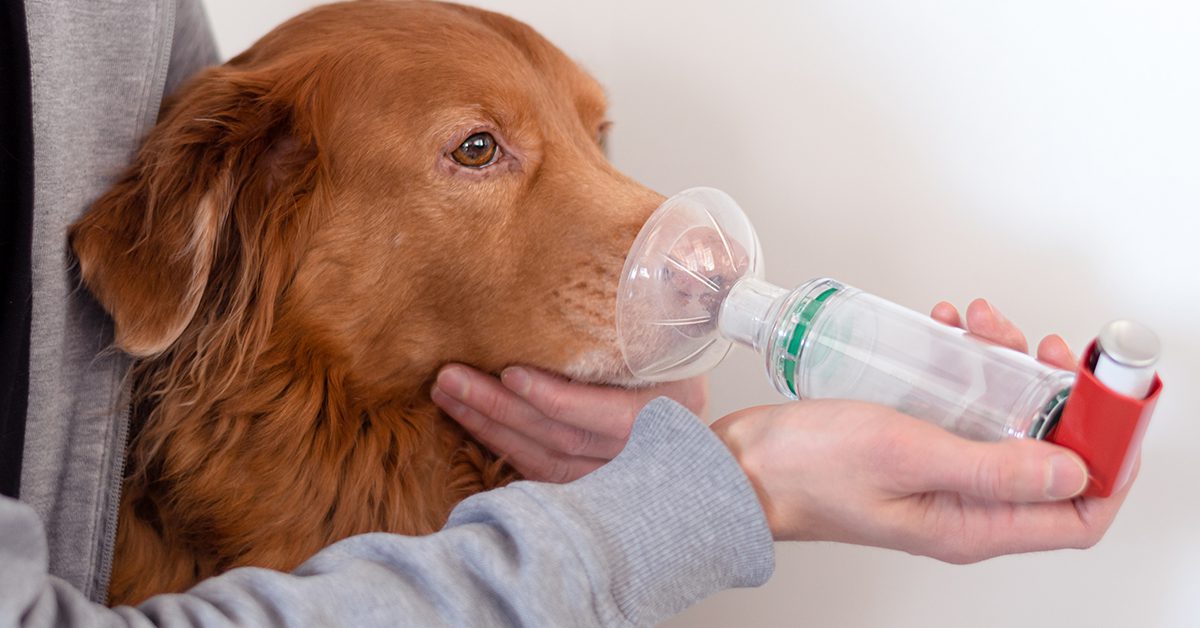
Dogs in respiratory distress may need oxygen therapy, sedation to reduce anxiety and ease breathing, and hospital monitoring until they stabilize. Allergic reactions often require injectable medications given in the clinic. Bronchitis and allergic airway disease may be managed with anti-inflammatory medications or airway-opening drugs, sometimes delivered through an inhaler with a canine spacer. Bacterial infections call for antibiotics, and parasites are treated with appropriate prescription medications. Foreign objects are removed with an airway scope or surgery. Structural problems such as severe brachycephalic airway syndrome, advanced tracheal collapse, or laryngeal paralysis may benefit from surgical correction. Dogs with heart disease typically need cardiac medications and ongoing monitoring.
Avoid giving your dog human cough syrups, decongestants, or allergy medications without your veterinarian’s direction, as some contain ingredients that are toxic to pets.
Supporting Your Dog’s Recovery
Many dogs improve within days of starting treatment, while chronic conditions like tracheal collapse and bronchitis require lifelong management. Giving every prescribed dose, attending recheck visits, and noting any return of dog wheezing help your veterinarian adjust the plan. Your veterinary team may suggest limiting strenuous exercise during recovery and avoiding hot, humid weather, which can make breathing harder for affected dogs. Keeping a simple log of when episodes happen, how long they last, and what your dog was doing beforehand can reveal triggers worth discussing at your next visit.
Practical Ways to Protect Your Dog’s Breathing
Not every case can be prevented, but daily habits go a long way toward reducing airway irritation and infection risk.
- Switch from a neck collar to a harness, especially for toy breeds and dogs with tracheal concerns
- Keep smoke, aerosol sprays, and heavily scented products away from your dog
- Stay current on vaccines for kennel cough and canine influenza if your dog boards or visits daycare
- Give year-round heartworm prevention as recommended by your veterinarian
- Help your dog maintain a healthy weight, which reduces pressure on the airways
- Choose sturdy toys and supervise chewing to avoid inhaled or swallowed fragments
Routine wellness exams also help catch heart disease and airway changes before they cause breathing problems. If dog wheezing has you concerned, the team at All Kinds Veterinary Hospital in Callaway is here to help. Call (301) 994-9919 to schedule an appointment for your dog.
Recent Posts
About Us
At All Kinds Veterinary Hospital, we believe in more than just keeping pets healthy—we’re dedicated to being your lifelong partner in your companion’s care. From routine check-ups to unexpected concerns, we’re here to be your first call and your trusted resource.